Logo Euler's Eyes
  • Materials
  • Dark Theme
    Light Theme Dark Theme System Theme
Logo Inverted Logo
  • Tags
  • 1 Phase
  • 1st Phase
  • 2 Phase
  • 2 Phase,
  • 2nd Phase
  • 2° Degree Equation
  • Accessibility
  • Addition Formulas
  • Alan Turing
  • Algebra
  • Algebraic Expressions
  • Algorithms
  • Ambiguous Case
  • Analysis
  • Analytic Geometry
  • Analytical Geometry
  • Ancient Greece
  • Angle Bisector
  • Angle Bisectors
  • Angles
  • Any Triangles
  • Apothem
  • Arc Capable
  • Arc Sine
  • Archimedes
  • Area
  • Areas
  • Arithmetic Progression
  • Artificial Intelligence
  • Astronomy
  • Augustin-Louis Cauchy
  • Axioms and Postulates
  • Basic Concepts of Statistics
  • Bayesian Statistics
  • Bernhard Riemann
  • Bernoulli
  • Bhaskara
  • Binary Numbers
  • Binomial
  • Biography
  • Biology
  • Black Holes
  • Bolzano
  • Bows
  • Braille
  • Brazil
  • Calculating Machine
  • Calculation
  • Calculus
  • Calculus of Variations
  • Cartesian Plane
  • Cartesian Product of Sets
  • Cauchy
  • Celestial Mechanics
  • Cellular Automata
  • Central Angle
  • Centroid
  • Chaos
  • Children
  • Circle
  • Circle Area
  • Circular Functions
  • Circumcenter
  • Circumference
  • Circumference Ratio
  • Circumferences
  • Classical Equations
  • Classification in Mathematics
  • Combinatorial Analysis
  • Combinatorics
  • Communities
  • Complement
  • Complementary Arcs
  • Complex Functions
  • Complex Numbers
  • Compound Interest
  • Computer Architecture
  • Computing
  • Congruence
  • Conics
  • Continuity
  • Conventions
  • Convergence
  • Correspondence Law
  • Cosecant
  • Cosine
  • Cosine of the Sum
  • Cotangent
  • Count
  • Cryptography
  • Culture
  • Cultures
  • Curvature
  • Curves
  • Decision Theory
  • Degree
  • Demo
  • Derivative
  • Derivatives
  • Descartes
  • Determinants
  • Determinism
  • Diagonals
  • Diagrams
  • Diamond
  • Differential Equations
  • Dispersion Measures
  • Distance
  • Division
  • Domain and Image
  • Double Bow
  • Drying
  • Economics
  • Einstein
  • Elasticity
  • Electromagnetism
  • Elementary Descriptive Statistics
  • Elementary School I
  • Elementary School II
  • ENEM 2021
  • ENEM 2022
  • ENEM 2023
  • ENEM 2024
  • ENEM 2025
  • Engineering
  • Entrance Exam
  • Equality
  • Equations
  • Equiprobable Events
  • Equivalence Between Sets
  • Equivalence Relations
  • Errors
  • Ethnomathematics
  • Euclid
  • Euclid's Postulate
  • Euler
  • Euler Project
  • Even and Odd Functions
  • Even Numbers
  • Exercises for Adding Natural Numbers
  • Exponential Function
  • External Angles
  • Fees
  • Fermat
  • Fermat's Last Theorem
  • Financial Mathematics
  • First Degree Equations
  • First Degree Functions
  • Flat
  • Flat Figures
  • Fourier
  • Fractions
  • French Revolution
  • Function Concept
  • Function Discovery
  • Functions
  • Fundamental Equations
  • Fundamental Relationships
  • FUVEST 2021
  • FUVEST 2022
  • FUVEST 2023
  • FUVEST 2024
  • FUVEST 2025
  • FUVEST 2026
  • Galois
  • Game Theory
  • Gauss
  • Geometric Constructions
  • Geometric Shapes
  • Geometry
  • Geometry With Natural Numbers
  • Geometry With Sequences of Numbers
  • Golden Segment
  • Graph Reading
  • Graph Theory
  • Graphics
  • Graphs
  • Graphs for Integers
  • Gravitation
  • Greatest Common Divisor
  • Group Theory
  • Groups
  • Göttingen
  • Half Bow
  • Hamilton
  • Height
  • Heron's Formula
  • History
  • History of Mathematics
  • Hydrostatics
  • Identities
  • Incenter
  • Increases and Discounts
  • Inequalities
  • Infinity
  • Inscribable Quadrilateral
  • Inscribed Angle
  • Integral
  • Integrals
  • Internal Angles
  • Interval Operations
  • Intervals
  • Introduction
  • Introduction to Function Theory
  • Introduction to Geometry
  • Introduction to Integers
  • Introduction to Logarithm Table
  • Introduction to Probability
  • Introduction to Radiciation
  • Introduction to Rational Numbers
  • Introduction to Real Numbers
  • Introduction to Sets
  • Introduction to Statistics
  • Inverse Functions
  • ITA 2022
  • ITA 2023
  • ITA 2024
  • ITA 2025
  • ITA 2026
  • Iverson
  • Johann Bernoulli
  • John Napier
  • John Nash
  • John Von Neumann
  • Lagrange
  • Language
  • Large Numbers
  • Latex
  • Law of Cosines
  • Law of Sines
  • Law of Tangents
  • Lean
  • Learning
  • Least Common Multiple
  • Legacy
  • Leibniz
  • Level 1
  • Level 2
  • Level 3
  • Limit
  • Limits
  • Linear Algebra
  • Linear Systems
  • Logarithm
  • Logarithm Properties
  • Logarithms
  • Logic
  • Magnification
  • Manuscripts
  • Maria Gaetana Agnesi
  • Math Elements
  • Mathematical Biology
  • Mathematical Logic
  • Mathematical Notation
  • Mathematical Physics
  • Mathematical Programming
  • Mathematics Education
  • Mathematics Elements
  • Mathematics for Children
  • Mathematics Teaching
  • Matrices
  • Maxwell
  • Measure
  • Mechanics
  • Medians
  • Medium Base
  • Mental Arithmetic
  • Metric Relationships
  • Metric System
  • Midpoint
  • Milan
  • Modular Function
  • Multiplication
  • Names
  • Napier
  • Napoleon
  • Natural Number Subtraction Exercises
  • Newton
  • Niels Henrik Abel
  • Notable Arcs
  • Notation
  • Notion of Infinity
  • Notions of Probability
  • Nth Root
  • Number And
  • Number Theory
  • Number Π
  • Numbering Systems
  • Numeration
  • Numerical Calculation
  • Numerical Methods
  • Obmep
  • OBMEP 2023
  • Obmep,
  • Odd Numbers
  • Operations With Rational Numbers
  • Operations With Sets
  • Operations With Venn-Euler Diagrams
  • Optics
  • Optimization
  • Orthocenter
  • Parallelism
  • Parallelogram
  • Parallels
  • Partial Derivatives
  • Pascal
  • Pascal's Triangle
  • Peano Axioms
  • Peirce
  • Percentage
  • Percentage Basics
  • Perimeter
  • Period
  • Periodic Functions
  • Perpendicular Bisector
  • Perpendicularity
  • Perpendiculars
  • Philosophy
  • Physical
  • Physics
  • Pi
  • Pi Number
  • Pi Numbers
  • Pierre-Simon Laplace
  • Pitot
  • Plane Geometry
  • Point
  • Point Power
  • Polygons
  • Polyhedra
  • Polynomials
  • Poncelet
  • Position Measurements
  • Postulates
  • Potentiation of Integers
  • Power With Negative Exponent
  • Prime Numbers
  • Primitive Notions
  • Principia
  • Probability
  • Problem Solving
  • Programming Languages
  • Progressions
  • Projective Geometry
  • Proof
  • Properties
  • Proportion
  • Proportionality
  • Proportions
  • Proportions and Geometry
  • Prostapheresis
  • Pure Mathematics
  • Pythagoras Theorem
  • Pythagorean Suits
  • Pólya
  • Quadrants
  • Quadratic Function
  • Quadrilateral
  • Quadrilaterals
  • Quantifier
  • Quantity Analysis
  • Quantum Mechanics
  • Quaternions
  • R Programming
  • Radian
  • Ramanujan
  • Randomness
  • Real Numbers
  • Rectangle Triangles
  • Reduction
  • Reduction to the First Quadrant
  • Reflection
  • Regular Polygons
  • Relations
  • Relationship Properties
  • Relativity
  • Residues
  • Riemann Hypothesis
  • Right Angle
  • Right Triangle
  • Rigour
  • Rule of 3
  • Rule of Three
  • Saussure
  • Semi-Straight
  • Semiotics
  • Sequences
  • Series
  • Set Family
  • Set Partition
  • Set Theory
  • Sets
  • Signal Rule
  • Similarity
  • Simple Interest
  • Simulation
  • Sine
  • Sine of the Sum
  • Solid Geometry
  • Solving Triangles
  • Sophie Germain
  • Spatial Geometry
  • Square Root
  • Statistic
  • Statistics
  • Stewart Ratio
  • Straight
  • Straight Segment
  • Sum of Angles
  • Supplement
  • Symmetry
  • Syracuse
  • Tangent
  • Tangentoid
  • Tests
  • Thales' Theorem
  • The Number Zero
  • Theorems
  • Thermodynamics
  • Transformation Into Product
  • Transformations
  • Transforms
  • Trapezium
  • Triangle
  • Triangle Area
  • Triangles
  • Triangular Inequality
  • Trigonometric Cycle
  • Trigonometric Equations
  • Trigonometric Inequalities
  • Trigonometric Table
  • Trigonometry
  • Triple Bow
  • Truth Table
  • Understanding Relationships
  • University of Bologna
  • Vectors
  • Venn-Euler Diagrams
  • Volumes
  • Werner's Formulas
  • Whole Numbers
  • Wiles
  • William Rowan Hamilton
  • Women in Mathematics
  • Writing
  • Year 2018
  • Year 2019
  • Year 2021
  • Year 2022
  • Zeta Function
  • École Polytechnique
  • Évariste Galois
Hero Image
Introduction to Radiciation

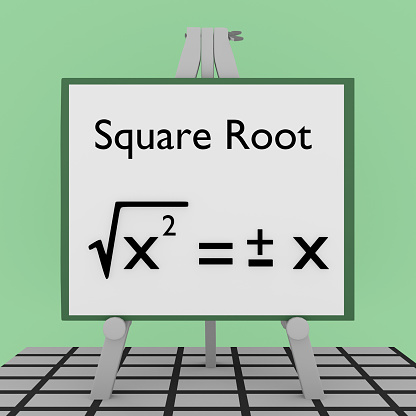
Not every root is irrational Test 4, 9 and 16 within the root. Compare with 2, 3 and 5. Explain the difference. Explore the controls and explain what changed in your own words. Ative o JavaScript para ver esta figura interativa. For many children the square root of a complex number and many teachers scare children by saying that it is something very complex. However, if we know where this term comes from, it is not something complex. Quite the contrary, it is simple and intuitive. This is information that has been lost over time, that is, we have become a sterile notation. The reader will see that semiotically active notations are those that evolved for the advancement of mathematics. The square root from the perspective of the Latin language (Latin) radix quadratum 4 aequalis 2, which we translate as the side of the square of area 4 is equal to 2.

October 1, 2022 Read
Hero Image
Triangles and Circles

The triangle is one of the most frequently discussed geometric figures in the study of geometry. Its relationship with circles is fundamental to understanding various geometry results. Some of these results are called notable points of the triangle. Similarity of Triangles In the proportions post, we saw concepts of similarity of triangles. Here we will show that the similarity of triangles can be demonstrated by circles. Triangles inside the circle Lemma 1: Let AB and CD be different chords of a circle that intersect at a point P inside the circle. Then $$\dfrac{AP}{CP} = \dfrac{PD}{PB} $$

October 1, 2022 Read
Hero Image
Angles and Circumferences

Learning about angles in circles is fundamental. This concept was extensively addressed by Euclid and the Greeks in general, such as Pythagoras and Archimedes. Bow Definition: Let $A$ and $B$ be points on a circle in a plane. The straight line $\vec{AB}$ (arc) separates the plane into two half-planes, each containing a part of the circle. Central Angle Definition: Let $A$ and $B$ be points of a circle on a center plane $C$. The central angle $\angle ACB$ determined by $A$ and $B$ or determined by the chord $AB$.

September 30, 2022 Read
Hero Image
Fundamentals

In this post we will delve deeper into some probability concepts. In previous posts we talked about the concepts of functions, which according to Descartes is the act of saying what one hears. Given concepts of events and sample spaces, we will calculate the chances of these events occurring with the concept of a function, in this case probability. Fundamentals In previous posts, we talked about the concept of function. In this way, René Discards used an ear as a symbol.

September 29, 2022 Read
Hero Image
Introduction to Probability

In this post we are going to talk a little about probability, for this we must bear in mind that working with this theory it is essential to evaluate: human intuition phenomena of nature (physis or physics) among others Over the years, mathematics has also been based on these concepts. Years 0 to 1637 - Drawing nature; Years 1637 to 1830 - Decode nature; Years 1830 to 1890 - Imitate and engineer nature; Years 1890 to 1980 - Control nature; Years 1980 to today - Creating nature. Initial notions of Probability Probability is based on human learning principles. For this, we use experiment concepts.

September 28, 2022 Read
Hero Image
Circumferences

The main work on geometry, Euclid’s book Elements, has several results for straight lines and circles. In this post, we will show several results for this subject. Basic Settings Below we define some fundamental terms for working with circles. Center Definition (Center): is a point that is the same distance from any point on the circle. Ray Definition (Radius): is any straight line segment that runs from the center to the circumference.

September 27, 2022 Read
Hero Image
Properties of Logarithms

From the semiotically active logarithm notation (abbreviated Mirabilis) we obtain the properties that are used in current times. Next, we present the properties. Law of Multiplication (Multiplicatio Canon) $$ \begin{aligned} \displaystyle \log_{2^6} 64 &= \\ &= \log_{2^6} 4~.~16 = \log_{2^2} 4 + \log_{2^4} 16 \\ &= \log_{2^6} 8~.~8 = \log_{2^3} 4 + \log_{2^3} 16 \\ &= \log_{2^6} 2~.~32 = \log_{2^1} 2 + \log_{2^5} 32 \\ \end{aligned} $$ $$\log_{C} A~.~B = \log_{C} A + \log_{C} B$$ Law of division (Tangentiplus Canon) $$ \begin{aligned} \log_{2^4} \frac{64}{4} &= \log_{2^6} 64 - \log_{2^2} 4 \\ \log_{5^1} \frac{125}{25} &= \log_{5^3} 125 - \log_{5^2} 25 \end{aligned} $$ $$\log_{C} \frac{A}{B} = \log_{C} A - \log_{C} B$$ Law of Power (Potestati Canon) $$ \begin{aligned} \log_{2^6} 4^3 &= \log_{2^6} 64\\ &= \log_{2^6} 4 ~.~ 4 ~.~ 4\\ &\overset{\text{Multiplicatio Canon}}{=} \log_{2^2} 4 + \log_{2^2} 4 + \log_{2^2} 4\\ &= 3~.~\log_{2^2} 4\\ \end{aligned} $$ $$\log_{C} A^B = B~.~\log_{C} A$$ Application for Planck constant To understand the power of this notation, let’s calculate Planck’s constant.

September 26, 2022 Read
Hero Image
Circle Area

Approximately 2300 years ago Eudoxus, Archimedes and others encouraged the area of ​​the circle through the exhaustion method, which consists of circumscribing and inscribing regular polygons in the figure that is intended to evaluate the area. Area of ​​the circle - Greek Method Initially, let’s define the area of ​​a square region. Definition: The area of ​​a square region of side $a$ is $a^2$. The Greeks verified that every polygonal region can be inscribed in a square through a finite number of operations with a ruler and compass.

September 25, 2022 Read
Hero Image
Introduction to Logarithm Table

A tool that served as a calculator in the Middle Ages, today serves as a horror story for children. The logarithm is one of the most famous works, so much so that it is treated as Mirabilis Abreviatio, that is, a semiotically active language. In this post we need concepts of potentiation seen in other topics covered. If you have questions, check the other posts. John Napier - the Baron of Merchiston John Napier - the Baron of Merchiston This work is due to John Napier, the Baron of Merchiston, in his work Mirifici Logarithmorum Canonis Descriptio (1614), which can be translated as A Wonderful Description of the Evolution of the Laws of God. To escape church sanctions, the work was again translated into A wonderful description of the laws of evolution of numbers. Years later Leonhard Euler honored Naiper with the Naperian logarithm. However, the irrational number $e$ was named after Napier, but $e$ comes from Euler.

September 25, 2022 Read
Hero Image
Pi Number

The secret of the wheels Change the diameter and compare C/d. The contour changes, but the ratio in the model remains π. Explore the controls and explain what changed in your own words. Ative o JavaScript para ver esta figura interativa. Archimedes’ constant, known as pi (Π) was widely studied in Greece (around the 3rd century BC). It all started with the study of one of the most important figures in geometry, which is the circle. This constant is obtained by the ratio ($\div$) of the length of the circumference and the diameter.

September 20, 2022 Read
Hero Image
Introduction to Irrational Numbers

In this group of posts the objective is to present non-rational numbers, which we call irrational. For this it is important to talk about the Pythagorean constant $\sqrt{2}$. Until the emergence of this constant, the Pythagorean school followed in the footsteps of the Sumerians, Plato’s academy, Alexandria’s school, among others. Historical definition of the Square Root In introductory posts, we saw concepts of square root, which is nothing more than the side of the square.

September 19, 2022 Read
Hero Image
Graphs for integers

A function graph with integer inputs Compare this dot plot with the bar graphs in class. Here, each pair represents an input x and an output f(x); In a bar chart, the horizontal axis can also represent categories. Em telas pequenas, deslize o gráfico na horizontal para ler os detalhes. Change the rule and look at the table. We do not connect the dots when the domain is ℤ. Ative o JavaScript para ver esta figura interativa.

September 16, 2022 Read
  • ««
  • «
  • 2
  • 3
  • 4
  • 5
  • 6
  • »
  • »»
Navigation
  • Start here
  • Recent posts
  • About Euler
  • App
  • Privacy
  • About us
  • Contact
Contact me:
  • hirowat2@gmail.com

Euler's Eyes
© 2021 Euler Eyes.
Powered by Hugo Logo