Logo Euler's Eyes
  • Materials
  • Dark Theme
    Light Theme Dark Theme System Theme
Logo Inverted Logo
  • Tags
  • 1 Phase
  • 1st Phase
  • 2 Phase
  • 2 Phase,
  • 2nd Phase
  • 2° Degree Equation
  • Accessibility
  • Addition Formulas
  • Alan Turing
  • Algebra
  • Algebraic Expressions
  • Algorithms
  • Ambiguous Case
  • Analysis
  • Analytic Geometry
  • Analytical Geometry
  • Ancient Greece
  • Angle Bisector
  • Angle Bisectors
  • Angles
  • Any Triangles
  • Apothem
  • Arc Capable
  • Arc Sine
  • Archimedes
  • Area
  • Areas
  • Arithmetic Progression
  • Artificial Intelligence
  • Astronomy
  • Augustin-Louis Cauchy
  • Axioms and Postulates
  • Basic Concepts of Statistics
  • Bayesian Statistics
  • Bernhard Riemann
  • Bernoulli
  • Bhaskara
  • Binary Numbers
  • Binomial
  • Biography
  • Biology
  • Black Holes
  • Bolzano
  • Bows
  • Braille
  • Brazil
  • Calculating Machine
  • Calculation
  • Calculus
  • Calculus of Variations
  • Cartesian Plane
  • Cartesian Product of Sets
  • Cauchy
  • Celestial Mechanics
  • Cellular Automata
  • Central Angle
  • Centroid
  • Chaos
  • Children
  • Circle
  • Circle Area
  • Circular Functions
  • Circumcenter
  • Circumference
  • Circumference Ratio
  • Circumferences
  • Classical Equations
  • Classification in Mathematics
  • Combinatorial Analysis
  • Combinatorics
  • Communities
  • Complement
  • Complementary Arcs
  • Complex Functions
  • Complex Numbers
  • Compound Interest
  • Computer Architecture
  • Computing
  • Congruence
  • Conics
  • Continuity
  • Conventions
  • Convergence
  • Correspondence Law
  • Cosecant
  • Cosine
  • Cosine of the Sum
  • Cotangent
  • Count
  • Cryptography
  • Culture
  • Cultures
  • Curvature
  • Curves
  • Decision Theory
  • Degree
  • Demo
  • Derivative
  • Derivatives
  • Descartes
  • Determinants
  • Determinism
  • Diagonals
  • Diagrams
  • Diamond
  • Differential Equations
  • Dispersion Measures
  • Distance
  • Division
  • Domain and Image
  • Double Bow
  • Drying
  • Economics
  • Einstein
  • Elasticity
  • Electromagnetism
  • Elementary Descriptive Statistics
  • Elementary School I
  • Elementary School II
  • ENEM 2021
  • ENEM 2022
  • ENEM 2023
  • ENEM 2024
  • ENEM 2025
  • Engineering
  • Entrance Exam
  • Equality
  • Equations
  • Equiprobable Events
  • Equivalence Between Sets
  • Equivalence Relations
  • Errors
  • Ethnomathematics
  • Euclid
  • Euclid's Postulate
  • Euler
  • Euler Project
  • Even and Odd Functions
  • Even Numbers
  • Exercises for Adding Natural Numbers
  • Exponential Function
  • External Angles
  • Fees
  • Fermat
  • Fermat's Last Theorem
  • Financial Mathematics
  • First Degree Equations
  • First Degree Functions
  • Flat
  • Flat Figures
  • Fourier
  • Fractions
  • French Revolution
  • Function Concept
  • Function Discovery
  • Functions
  • Fundamental Equations
  • Fundamental Relationships
  • FUVEST 2021
  • FUVEST 2022
  • FUVEST 2023
  • FUVEST 2024
  • FUVEST 2025
  • FUVEST 2026
  • Galois
  • Game Theory
  • Gauss
  • Geometric Constructions
  • Geometric Shapes
  • Geometry
  • Geometry With Natural Numbers
  • Geometry With Sequences of Numbers
  • Golden Segment
  • Graph Reading
  • Graph Theory
  • Graphics
  • Graphs
  • Graphs for Integers
  • Gravitation
  • Greatest Common Divisor
  • Group Theory
  • Groups
  • Göttingen
  • Half Bow
  • Hamilton
  • Height
  • Heron's Formula
  • History
  • History of Mathematics
  • Hydrostatics
  • Identities
  • Incenter
  • Increases and Discounts
  • Inequalities
  • Infinity
  • Inscribable Quadrilateral
  • Inscribed Angle
  • Integral
  • Integrals
  • Internal Angles
  • Interval Operations
  • Intervals
  • Introduction
  • Introduction to Function Theory
  • Introduction to Geometry
  • Introduction to Integers
  • Introduction to Logarithm Table
  • Introduction to Probability
  • Introduction to Radiciation
  • Introduction to Rational Numbers
  • Introduction to Real Numbers
  • Introduction to Sets
  • Introduction to Statistics
  • Inverse Functions
  • ITA 2022
  • ITA 2023
  • ITA 2024
  • ITA 2025
  • ITA 2026
  • Iverson
  • Johann Bernoulli
  • John Napier
  • John Nash
  • John Von Neumann
  • Lagrange
  • Language
  • Large Numbers
  • Latex
  • Law of Cosines
  • Law of Sines
  • Law of Tangents
  • Lean
  • Learning
  • Least Common Multiple
  • Legacy
  • Leibniz
  • Level 1
  • Level 2
  • Level 3
  • Limit
  • Limits
  • Linear Algebra
  • Linear Systems
  • Logarithm
  • Logarithm Properties
  • Logarithms
  • Logic
  • Magnification
  • Manuscripts
  • Maria Gaetana Agnesi
  • Math Elements
  • Mathematical Biology
  • Mathematical Logic
  • Mathematical Notation
  • Mathematical Physics
  • Mathematical Programming
  • Mathematics Education
  • Mathematics Elements
  • Mathematics for Children
  • Mathematics Teaching
  • Matrices
  • Maxwell
  • Measure
  • Mechanics
  • Medians
  • Medium Base
  • Mental Arithmetic
  • Metric Relationships
  • Metric System
  • Midpoint
  • Milan
  • Modular Function
  • Multiplication
  • Names
  • Napier
  • Napoleon
  • Natural Number Subtraction Exercises
  • Newton
  • Niels Henrik Abel
  • Notable Arcs
  • Notation
  • Notion of Infinity
  • Notions of Probability
  • Nth Root
  • Number And
  • Number Theory
  • Number Π
  • Numbering Systems
  • Numeration
  • Numerical Calculation
  • Numerical Methods
  • Obmep
  • OBMEP 2023
  • Obmep,
  • Odd Numbers
  • Operations With Rational Numbers
  • Operations With Sets
  • Operations With Venn-Euler Diagrams
  • Optics
  • Optimization
  • Orthocenter
  • Parallelism
  • Parallelogram
  • Parallels
  • Partial Derivatives
  • Pascal
  • Pascal's Triangle
  • Peano Axioms
  • Peirce
  • Percentage
  • Percentage Basics
  • Perimeter
  • Period
  • Periodic Functions
  • Perpendicular Bisector
  • Perpendicularity
  • Perpendiculars
  • Philosophy
  • Physical
  • Physics
  • Pi
  • Pi Number
  • Pi Numbers
  • Pierre-Simon Laplace
  • Pitot
  • Plane Geometry
  • Point
  • Point Power
  • Polygons
  • Polyhedra
  • Polynomials
  • Poncelet
  • Position Measurements
  • Postulates
  • Potentiation of Integers
  • Power With Negative Exponent
  • Prime Numbers
  • Primitive Notions
  • Principia
  • Probability
  • Problem Solving
  • Programming Languages
  • Progressions
  • Projective Geometry
  • Proof
  • Properties
  • Proportion
  • Proportionality
  • Proportions
  • Proportions and Geometry
  • Prostapheresis
  • Pure Mathematics
  • Pythagoras Theorem
  • Pythagorean Suits
  • Pólya
  • Quadrants
  • Quadratic Function
  • Quadrilateral
  • Quadrilaterals
  • Quantifier
  • Quantity Analysis
  • Quantum Mechanics
  • Quaternions
  • R Programming
  • Radian
  • Ramanujan
  • Randomness
  • Real Numbers
  • Rectangle Triangles
  • Reduction
  • Reduction to the First Quadrant
  • Reflection
  • Regular Polygons
  • Relations
  • Relationship Properties
  • Relativity
  • Residues
  • Riemann Hypothesis
  • Right Angle
  • Right Triangle
  • Rigour
  • Rule of 3
  • Rule of Three
  • Saussure
  • Semi-Straight
  • Semiotics
  • Sequences
  • Series
  • Set Family
  • Set Partition
  • Set Theory
  • Sets
  • Signal Rule
  • Similarity
  • Simple Interest
  • Simulation
  • Sine
  • Sine of the Sum
  • Solid Geometry
  • Solving Triangles
  • Sophie Germain
  • Spatial Geometry
  • Square Root
  • Statistic
  • Statistics
  • Stewart Ratio
  • Straight
  • Straight Segment
  • Sum of Angles
  • Supplement
  • Symmetry
  • Syracuse
  • Tangent
  • Tangentoid
  • Tests
  • Thales' Theorem
  • The Number Zero
  • Theorems
  • Thermodynamics
  • Transformation Into Product
  • Transformations
  • Transforms
  • Trapezium
  • Triangle
  • Triangle Area
  • Triangles
  • Triangular Inequality
  • Trigonometric Cycle
  • Trigonometric Equations
  • Trigonometric Inequalities
  • Trigonometric Table
  • Trigonometry
  • Triple Bow
  • Truth Table
  • Understanding Relationships
  • University of Bologna
  • Vectors
  • Venn-Euler Diagrams
  • Volumes
  • Werner's Formulas
  • Whole Numbers
  • Wiles
  • William Rowan Hamilton
  • Women in Mathematics
  • Writing
  • Year 2018
  • Year 2019
  • Year 2021
  • Year 2022
  • Zeta Function
  • École Polytechnique
  • Évariste Galois
Hero Image
Rule of 3

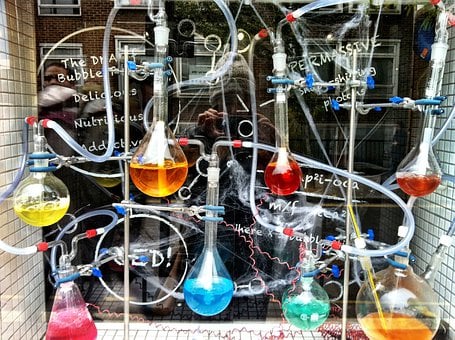
The rule of three is widely used by chemists for stoichiometric calculations. This rule is taught in elementary school and was used by Galileo in his work Variar Opera Mathematica of 1679. Help us build the math website. Donate as much as you can. Donation via Mercado Pago. Donation via PagSeguro. Below are some historical fragments about the rule of three:

August 12, 2022 Read
Navigation
  • Start here
  • Recent posts
  • About Euler
  • App
  • Privacy
  • About us
  • Contact
Contact me:
  • hirowat2@gmail.com

Euler's Eyes
© 2021 Euler Eyes.
Powered by Hugo Logo