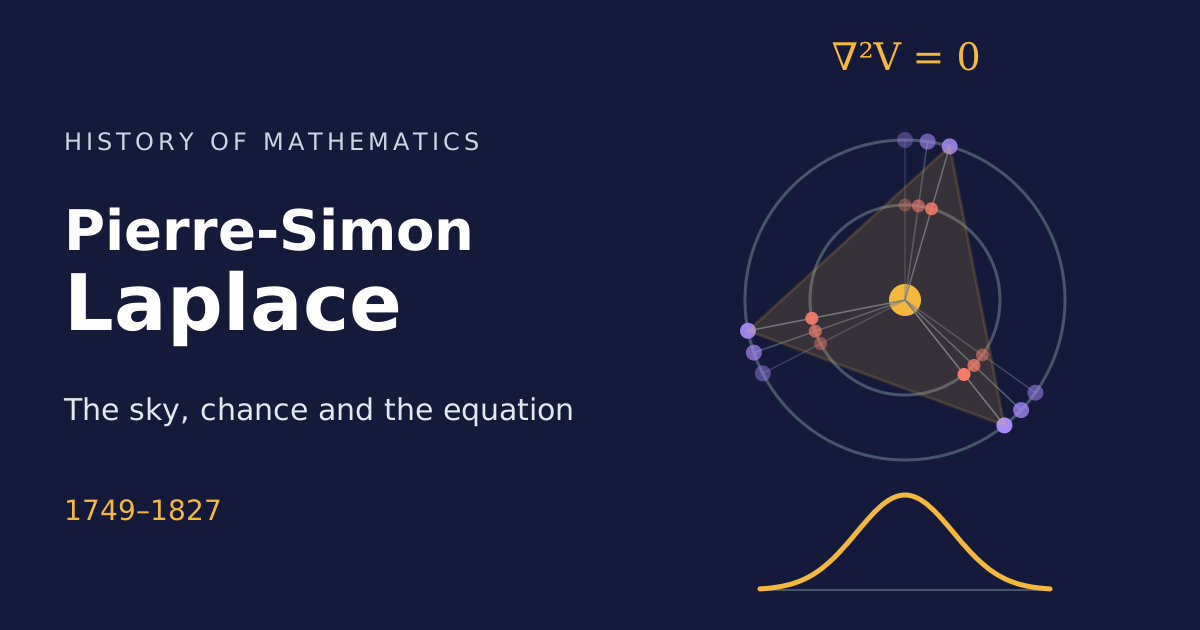
Newton explained the orbits of the planets with a single law, but he knew it brought a problem with it. Each planet is pulled by the Sun and also, a little, by the other planets. These small attractions pile up over time. Newton suspected that, in the long run, the Solar System would fall into disorder and that divine intervention would be needed, from time to time, to set it right again.
The Exposition of the System of the World, of 1796, was a book for readers without mathematical training. In it Laplace told, in prose, everything celestial mechanics had discovered. At the end, in a note that he himself presented “with the distrust that everything not a result of observation or calculation should inspire”, he ventured an explanation for the origin of the Solar System. Title page of the second edition of the Exposition of the System of the World, 1798 (year VII of the republican calendar).Pierre-Simon Laplace · Wikimedia Commons · public domain Too great a coincidence Laplace started from facts everyone knew. The planets then known go around the Sun in the same direction, in orbits almost in the same plane and almost circular. They also spin on themselves in the same direction, and the same holds for the satellites around the planets. Adding up planets, satellites and rotations, Laplace counted 43 motions, all in the same direction.
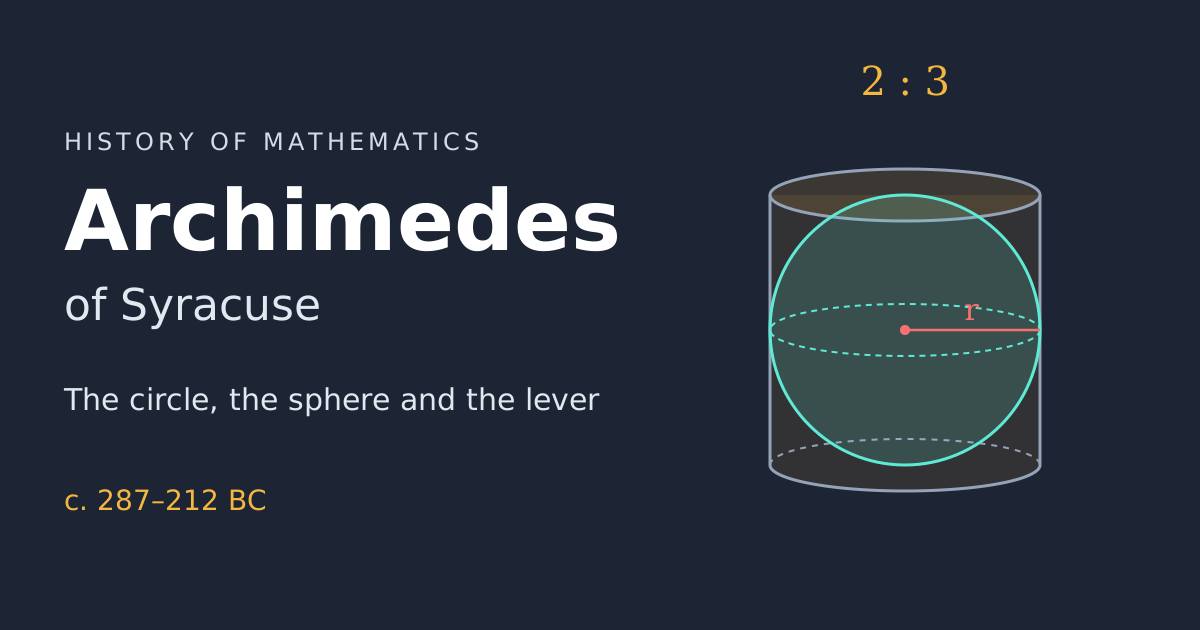
There are some, King Gelon, who think that the number of the sand is infinite. I will try to show you that some of the numbers I have named exceed not only the number of the sand that would fill the Earth, but also that of the sand that would fill the universe. — Archimedes, The Sand Reckoner, letter to King Gelon The Sand Reckoner is a letter to Gelon, son of King Hiero, and the only book by Archimedes written for a reader who was not a mathematician. The problem is to prove that there is a number larger than the quantity of grains of sand needed to fill the whole universe.