Logo Euler's Eyes
  • Materials
  • Dark Theme
    Light Theme Dark Theme System Theme
Logo Inverted Logo
  • Tags
  • 1 Phase
  • 1st Phase
  • 2 Phase
  • 2 Phase,
  • 2nd Phase
  • 2° Degree Equation
  • Accessibility
  • Addition Formulas
  • Alan Turing
  • Algebra
  • Algebraic Expressions
  • Algorithms
  • Ambiguous Case
  • Analysis
  • Analytic Geometry
  • Analytical Geometry
  • Ancient Greece
  • Angle Bisector
  • Angle Bisectors
  • Angles
  • Any Triangles
  • Apothem
  • Arc Capable
  • Arc Sine
  • Archimedes
  • Area
  • Areas
  • Arithmetic Progression
  • Artificial Intelligence
  • Astronomy
  • Augustin-Louis Cauchy
  • Axioms and Postulates
  • Basic Concepts of Statistics
  • Bayesian Statistics
  • Bernhard Riemann
  • Bernoulli
  • Bhaskara
  • Binary Numbers
  • Binomial
  • Biography
  • Biology
  • Black Holes
  • Bolzano
  • Bows
  • Braille
  • Brazil
  • Calculating Machine
  • Calculation
  • Calculus
  • Calculus of Variations
  • Cartesian Plane
  • Cartesian Product of Sets
  • Cauchy
  • Celestial Mechanics
  • Cellular Automata
  • Central Angle
  • Centroid
  • Chaos
  • Children
  • Circle
  • Circle Area
  • Circular Functions
  • Circumcenter
  • Circumference
  • Circumference Ratio
  • Circumferences
  • Classical Equations
  • Classification in Mathematics
  • Combinatorial Analysis
  • Combinatorics
  • Communities
  • Complement
  • Complementary Arcs
  • Complex Functions
  • Complex Numbers
  • Compound Interest
  • Computer Architecture
  • Computing
  • Congruence
  • Conics
  • Continuity
  • Conventions
  • Convergence
  • Correspondence Law
  • Cosecant
  • Cosine
  • Cosine of the Sum
  • Cotangent
  • Count
  • Cryptography
  • Culture
  • Cultures
  • Curvature
  • Curves
  • Decision Theory
  • Degree
  • Demo
  • Derivative
  • Derivatives
  • Descartes
  • Determinants
  • Determinism
  • Diagonals
  • Diagrams
  • Diamond
  • Differential Equations
  • Dispersion Measures
  • Distance
  • Division
  • Domain and Image
  • Double Bow
  • Drying
  • Economics
  • Einstein
  • Elasticity
  • Electromagnetism
  • Elementary Descriptive Statistics
  • Elementary School I
  • Elementary School II
  • ENEM 2021
  • ENEM 2022
  • ENEM 2023
  • ENEM 2024
  • ENEM 2025
  • Engineering
  • Entrance Exam
  • Equality
  • Equations
  • Equiprobable Events
  • Equivalence Between Sets
  • Equivalence Relations
  • Errors
  • Ethnomathematics
  • Euclid
  • Euclid's Postulate
  • Euler
  • Euler Project
  • Even and Odd Functions
  • Even Numbers
  • Exercises for Adding Natural Numbers
  • Exponential Function
  • External Angles
  • Fees
  • Fermat
  • Fermat's Last Theorem
  • Financial Mathematics
  • First Degree Equations
  • First Degree Functions
  • Flat
  • Flat Figures
  • Fourier
  • Fractions
  • French Revolution
  • Function Concept
  • Function Discovery
  • Functions
  • Fundamental Equations
  • Fundamental Relationships
  • FUVEST 2021
  • FUVEST 2022
  • FUVEST 2023
  • FUVEST 2024
  • FUVEST 2025
  • FUVEST 2026
  • Galois
  • Game Theory
  • Gauss
  • Geometric Constructions
  • Geometric Shapes
  • Geometry
  • Geometry With Natural Numbers
  • Geometry With Sequences of Numbers
  • Golden Segment
  • Graph Reading
  • Graph Theory
  • Graphics
  • Graphs
  • Graphs for Integers
  • Gravitation
  • Greatest Common Divisor
  • Group Theory
  • Groups
  • Göttingen
  • Half Bow
  • Hamilton
  • Height
  • Heron's Formula
  • History
  • History of Mathematics
  • Hydrostatics
  • Identities
  • Incenter
  • Increases and Discounts
  • Inequalities
  • Infinity
  • Inscribable Quadrilateral
  • Inscribed Angle
  • Integral
  • Integrals
  • Internal Angles
  • Interval Operations
  • Intervals
  • Introduction
  • Introduction to Function Theory
  • Introduction to Geometry
  • Introduction to Integers
  • Introduction to Logarithm Table
  • Introduction to Probability
  • Introduction to Radiciation
  • Introduction to Rational Numbers
  • Introduction to Real Numbers
  • Introduction to Sets
  • Introduction to Statistics
  • Inverse Functions
  • ITA 2022
  • ITA 2023
  • ITA 2024
  • ITA 2025
  • ITA 2026
  • Iverson
  • Johann Bernoulli
  • John Napier
  • John Nash
  • John Von Neumann
  • Lagrange
  • Language
  • Large Numbers
  • Latex
  • Law of Cosines
  • Law of Sines
  • Law of Tangents
  • Lean
  • Learning
  • Least Common Multiple
  • Legacy
  • Leibniz
  • Level 1
  • Level 2
  • Level 3
  • Limit
  • Limits
  • Linear Algebra
  • Linear Systems
  • Logarithm
  • Logarithm Properties
  • Logarithms
  • Logic
  • Magnification
  • Manuscripts
  • Maria Gaetana Agnesi
  • Math Elements
  • Mathematical Biology
  • Mathematical Logic
  • Mathematical Notation
  • Mathematical Physics
  • Mathematical Programming
  • Mathematics Education
  • Mathematics Elements
  • Mathematics for Children
  • Mathematics Teaching
  • Matrices
  • Maxwell
  • Measure
  • Mechanics
  • Medians
  • Medium Base
  • Mental Arithmetic
  • Metric Relationships
  • Metric System
  • Midpoint
  • Milan
  • Modular Function
  • Multiplication
  • Names
  • Napier
  • Napoleon
  • Natural Number Subtraction Exercises
  • Newton
  • Niels Henrik Abel
  • Notable Arcs
  • Notation
  • Notion of Infinity
  • Notions of Probability
  • Nth Root
  • Number And
  • Number Theory
  • Number Π
  • Numbering Systems
  • Numeration
  • Numerical Calculation
  • Numerical Methods
  • Obmep
  • OBMEP 2023
  • Obmep,
  • Odd Numbers
  • Operations With Rational Numbers
  • Operations With Sets
  • Operations With Venn-Euler Diagrams
  • Optics
  • Optimization
  • Orthocenter
  • Parallelism
  • Parallelogram
  • Parallels
  • Partial Derivatives
  • Pascal
  • Pascal's Triangle
  • Peano Axioms
  • Peirce
  • Percentage
  • Percentage Basics
  • Perimeter
  • Period
  • Periodic Functions
  • Perpendicular Bisector
  • Perpendicularity
  • Perpendiculars
  • Philosophy
  • Physical
  • Physics
  • Pi
  • Pi Number
  • Pi Numbers
  • Pierre-Simon Laplace
  • Pitot
  • Plane Geometry
  • Point
  • Point Power
  • Polygons
  • Polyhedra
  • Polynomials
  • Poncelet
  • Position Measurements
  • Postulates
  • Potentiation of Integers
  • Power With Negative Exponent
  • Prime Numbers
  • Primitive Notions
  • Principia
  • Probability
  • Problem Solving
  • Programming Languages
  • Progressions
  • Projective Geometry
  • Proof
  • Properties
  • Proportion
  • Proportionality
  • Proportions
  • Proportions and Geometry
  • Prostapheresis
  • Pure Mathematics
  • Pythagoras Theorem
  • Pythagorean Suits
  • Pólya
  • Quadrants
  • Quadratic Function
  • Quadrilateral
  • Quadrilaterals
  • Quantifier
  • Quantity Analysis
  • Quantum Mechanics
  • Quaternions
  • R Programming
  • Radian
  • Ramanujan
  • Randomness
  • Real Numbers
  • Rectangle Triangles
  • Reduction
  • Reduction to the First Quadrant
  • Reflection
  • Regular Polygons
  • Relations
  • Relationship Properties
  • Relativity
  • Residues
  • Riemann Hypothesis
  • Right Angle
  • Right Triangle
  • Rigour
  • Rule of 3
  • Rule of Three
  • Saussure
  • Semi-Straight
  • Semiotics
  • Sequences
  • Series
  • Set Family
  • Set Partition
  • Set Theory
  • Sets
  • Signal Rule
  • Similarity
  • Simple Interest
  • Simulation
  • Sine
  • Sine of the Sum
  • Solid Geometry
  • Solving Triangles
  • Sophie Germain
  • Spatial Geometry
  • Square Root
  • Statistic
  • Statistics
  • Stewart Ratio
  • Straight
  • Straight Segment
  • Sum of Angles
  • Supplement
  • Symmetry
  • Syracuse
  • Tangent
  • Tangentoid
  • Tests
  • Thales' Theorem
  • The Number Zero
  • Theorems
  • Thermodynamics
  • Transformation Into Product
  • Transformations
  • Transforms
  • Trapezium
  • Triangle
  • Triangle Area
  • Triangles
  • Triangular Inequality
  • Trigonometric Cycle
  • Trigonometric Equations
  • Trigonometric Inequalities
  • Trigonometric Table
  • Trigonometry
  • Triple Bow
  • Truth Table
  • Understanding Relationships
  • University of Bologna
  • Vectors
  • Venn-Euler Diagrams
  • Volumes
  • Werner's Formulas
  • Whole Numbers
  • Wiles
  • William Rowan Hamilton
  • Women in Mathematics
  • Writing
  • Year 2018
  • Year 2019
  • Year 2021
  • Year 2022
  • Zeta Function
  • École Polytechnique
  • Évariste Galois
Hero Image
Image credits

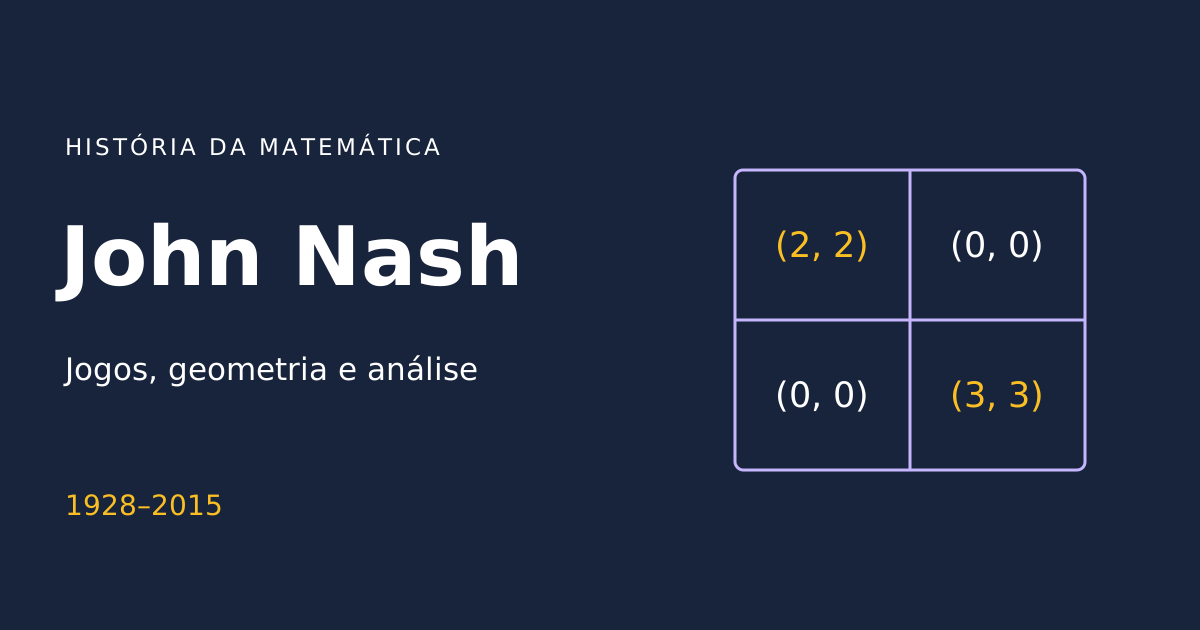
Photographs and images All come from Wikimedia Commons. We use the thumbnails provided by Commons, unedited. Portrait of John Nash, photo by Peter Badge: source page · CC BY-SA 3.0. John Nash in 2006, in Cologne, photo by Elke Wetzig: source page · CC BY-SA 3.0. Isometric embedding of the flat torus, Hevea project, uploaded by Romainbehar: source page · CC0. Blog figures The cover, the Hex board and the graph of the product of gains in bargaining are original illustrations, with versions in each language of the site. The board shows an invented game, in which red has completed its chain.

October 15, 2026 Read
Hero Image
Image credits

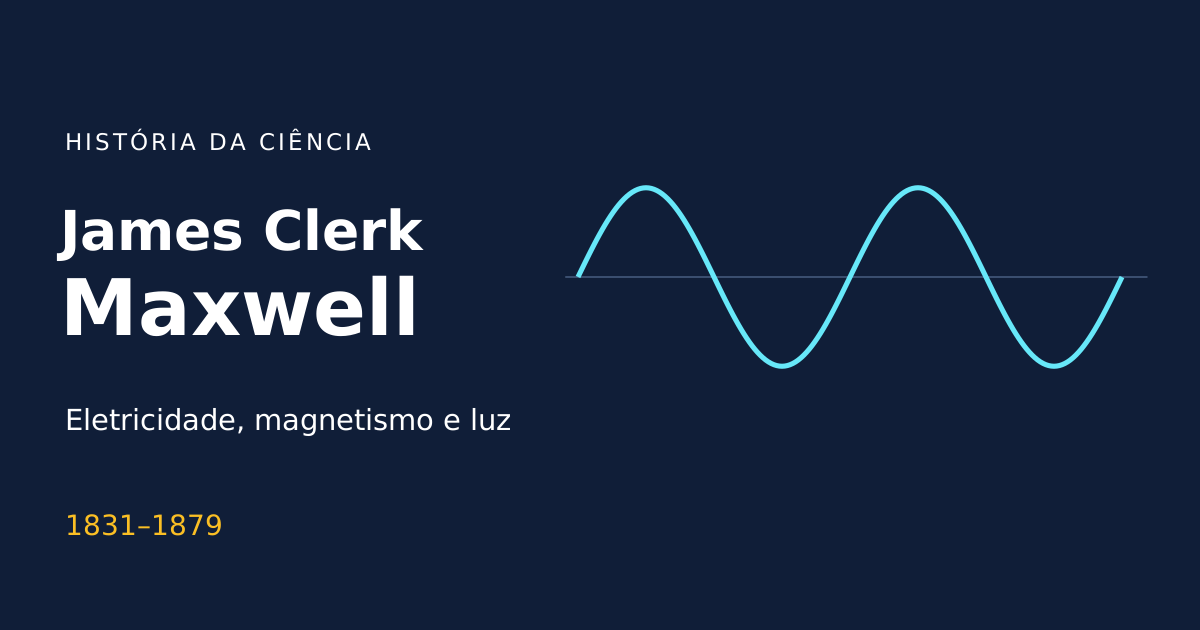
Historical images and photographs All come from Wikimedia Commons. We use the thumbnails provided by Commons, unedited. Portrait of Maxwell, engraving by G. J. Stodart, 1890: source page · public domain. The tartan ribbon, the first colour photograph, by Maxwell and Thomas Sutton, 1861: source page · public domain. Saturn seen from above, by the Cassini spacecraft, 2013: NASA/JPL-Caltech/Space Science Institute, source page · public domain. Michael Faraday, photograph from the 1850s, unknown author: source page · public domain. Title page of the Treatise on Electricity and Magnetism, Oxford, 1873: source page · public domain. The statue of Maxwell with his dog Toby, in Edinburgh, photo by Зеленый кабинет: source page · CC BY-SA 2.0. Blog figures The cover, the wave profile and the graph of the Maxwell distribution for nitrogen are original illustrations, with versions in each of the site’s languages. The graph was calculated with the exact formula of the distribution. The discussion of quaternions and vectors, in the post on the equations, draws on passages from this site’s old course on vectors.
October 14, 2026 Read
Hero Image
Lagrange's legacy

Lagrange is the lofty pyramid of the mathematical sciences. — Napoleon Bonaparte, according to his contemporaries Lagrange left no anecdotes of precocious genius like Pascal, nor a body of work the size of Euler’s. He left something else: a way of doing mathematics. Where others drew, he calculated; where others found a trick for each problem, he looked for the rule that explained all the tricks. Almost everything he did is still in the textbooks under his name: the Euler–Lagrange equation, the Lagrangian, the Lagrange points, Lagrange’s theorem, the Lagrange remainder, Lagrange multipliers.

October 14, 2026 Read
Hero Image
Image credits for Sophie Germain

Historical images and photos All come from Wikimedia Commons. We use the thumbnails provided by Commons; the portrait was only converted from PNG to JPEG. Portrait of Sophie Germain, drawing by Berthe Chégaray of a medal in her memory, published in 1896: source page · public domain. Figures from the Research on the Theory of Elastic Surfaces, Sophie Germain, 1821, copy in the ETH-Bibliothek Zürich: source page · public domain. Chladni plate excited by a bow, engraving from 1879: source page · public domain. Grave in the Père-Lachaise cemetery, photo by Pierre-Yves Beaudouin, 2015: source page · CC BY-SA 4.0. Blog figures The cover, the nodal lines of a square plate and the drawing of the curvatures of the sphere, cylinder and saddle are original illustrations. The nodal lines were computed with the simplified model described in the text and do not reproduce photos of real plates.

October 13, 2026 Read
Hero Image
The legacy of Euclid

He studied and nearly mastered the six books of Euclid, since he was a member of Congress. — Abraham Lincoln, autobiographical note (1860) After the Bible, the Elements are one of the most copied, translated and printed books in history. Since the first printed edition, in Venice in 1482, there have been more than a thousand editions. For more than two thousand years, “studying geometry” meant “studying Euclid”. The first printed edition of the Elements, made by Erhard Ratdolt in Venice in 1482, in a Latin translation. The figures are in the margins, beside the text; an early reader filled the pages with notes.Folger Shakespeare Library · Wikimedia Commons · CC BY-SA 4.0 The many faces of a book This site’s old trigonometry course gathered some editions that changed the way Euclid was presented:

October 12, 2026 Read
Hero Image
Image credits

Historical images All come from Wikimedia Commons. We use the thumbnails provided by Commons, unedited. Portrait of Jakob Bernoulli, painted in 1687 by his brother Niklaus Bernoulli: source page · public domain. Title page of the Ars conjectandi, Basel, 1713: source page · public domain. Jakob Bernoulli’s tombstone in the cloister of Basel Minster, photo by Wladyslaw Sojka: source page · Free Art License. Cross-section of a nautilus shell, photo by Florian Elias Rieser: source page · CC BY-SA 4.0. Blog figures The cover, the drawing of the two spirals and the graph of the proportion of heads in simulated coin tosses are original illustrations, with versions in each of the site’s languages. The table of notations for the integral, in the post on the legacy, was redone from a table in this site’s old calculus course.

October 11, 2026 Read
Hero Image
The weight of air: the Puy de Dôme experiment

For two thousand years scholars repeated a saying of Aristotle’s: nature abhors a vacuum. If you suck the air out of a straw, the liquid rises because nature will not let the space stay empty. It seemed to explain everything. But the well-diggers of Florence had a problem. Suction pumps could not raise water more than about 10 metres, however hard they tried. Why would nature’s horror of the vacuum stop at 10 metres?

October 8, 2026 Read
Hero Image
Fermat's last theorem: from the margin to Wiles's proof

Everyone knows Pythagoras’s theorem: $3^2+4^2=5^2$. There are infinitely many triples of whole numbers like this, such as $5,12,13$ and $8,15,17$. What about cubes? Are there positive integers with $a^3+b^3=c^3$? And with fourth powers? The note in the margin The page of problem II.8 in the 1670 edition of Diophantus’s Arithmetica. Just below the problem comes the “Observatio Domini Petri de Fermat”: the margin note, printed by Fermat’s son.Diophantus, ed. Samuel de Fermat (1670) · Wikimedia Commons · public domain Around 1637, reading Diophantus’s problem about splitting a square into two squares, Fermat wrote in the margin of the book, in Latin:

October 7, 2026 Read
Hero Image
Leibniz's legacy

The calculus war Leibniz published calculus in 1684 and 1686. Newton had reached the same ideas in 1665–1666 but kept everything in manuscripts. For fifteen years nobody disputed anything. In 1699 the Swiss mathematician Nicolas Fatio de Duillier, a friend of Newton, hinted in a book that Leibniz had drawn on Newton. In 1708 the Scot John Keill went further and accused Leibniz of plagiarism. The argument: in 1676 Leibniz had visited London and seen a copy of Newton’s De analysi.

October 7, 2026 Read
Hero Image
Newton's legacy

Newton was the greatest genius who ever lived, and the most fortunate, for there is only one universe to discover, and it can be discovered only once. — Joseph-Louis Lagrange, as reported by his contemporaries The calculus war Newton created the method of fluxions in 1665–1666 but did not publish it. Leibniz reached calculus independently in 1675 and published in 1684. For some years nobody quarrelled. In 1676 the two even exchanged cordial letters through Henry Oldenburg, and Newton hid his ideas in an anagram.

October 6, 2026 Read
Hero Image
The Egregium Theorem and curvature

Measuring Hannover, Gauss thought a lot about how to make maps of a curved Earth. In 1827 published the result he called Theorema Egregium, the “remarkable theorem”: the curvature of a surface can be measured by those who live inside it, without going out to look from the outside. A consequence: in a plane, the angles of a triangle add up to 180°. In a sphere, they add up to more. Take the triangle with one vertex at the north pole and the other two at the equator:

October 1, 2026 Read
Hero Image
A reading of the Cogito: listening and speaking

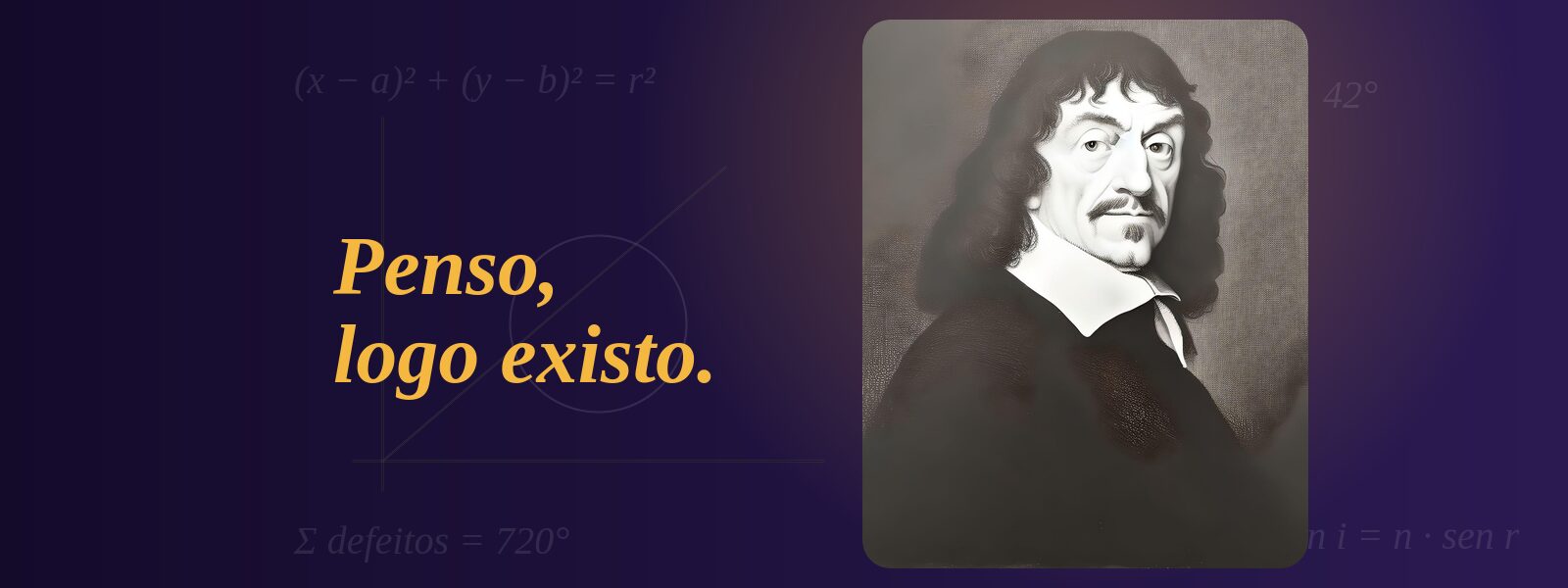
Cogito ergo sum drawn on the Cartesian plane.Redesigned diagram for the Euler’s Eyes collection Here at Euler’s Eyes we like to read “I think, therefore I am” as a little machine. The thought hears something (in Latin, audire) and speaks another (fabulari). The rule that binds what What you hear is the function. Method words physis: nature; methode: the reasoning, the path; graphiko’s: the lines, the drawing; máthema: what is learned, the act of deciphering; functus: who fulfills a task; dominus: the lord, where the word dominion comes from. An example: “say what you hear twice”. Empty parentheses act as a waiting ear a number:

September 30, 2026 Read
  • ««
  • «
  • 17
  • 18
  • 19
  • 20
  • 21
  • »
  • »»
Navigation
  • Start here
  • Recent posts
  • About Euler
  • App
  • Privacy
  • About us
  • Contact
Contact me:
  • hirowat2@gmail.com

Euler's Eyes
© 2021 Euler Eyes.
Powered by Hugo Logo