
Euler's Eyes
2026-10-22
General notions and periodic functions
Before defining the circular functions, we equipped the cycle with four axes and a language to say in which “piece” of the loop a number is. Then we study the property that all these functions will have in common: periodicity.
The story
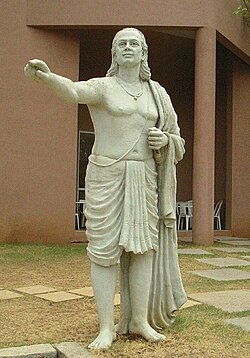
The word sine has a curious history. Fifth-century Indian astronomers such as Aryabhata tabulated the half-chord, which they called jya-ardha or simply jya. Arabic translators transcribed the term as jiba, written only with consonants, jb. In the 12th century, Latin translators read jaib — “fold,” “breast” — and translated it as sinus. The tangent and secant gained their name from the Danish Thomas Fincke, in 1583, and the prefix co- of cosine, cotangent and cosecant, which means “of the complement”, was fixed by Edmund Gunter in 1620.
The idea of periodic function as an object of study, and not just as a table, matured in the 18th century with Euler and exploded in the 19th century with Fourier, which showed that any periodic movement can be written as a sum of sines and cosines (see the reading at the end of the chapter).
Sanskrit: half-string"] --> B["jya
short form"] B --> C["jiba
Arabic, without proper meaning"] C --> D["jb
written with only consonants"] D --> E["jaib
read as 'fold', 'breast'"] E --> F["sinus
Latin, century. XII"] F --> G["sine"]
- Aryabhata escreve o Aryabhatiya. A meia-corda se chama jya-ardha, ou só jya, “corda de arco”.
- Na Casa da Sabedoria, as tábuas indianas são traduzidas para o árabe. Jya vira jiba, palavra sem significado em árabe, escrita só com as consoantes jb.
- Robert de Chester traduz para o latim as tábuas de al-Khwarizmi. Lendo jb como jaib — “dobra”, “seio” —, escreve sinus.
- Gerardo de Cremona e outros tradutores de Toledo vertem dezenas de obras árabes de astronomia; sinus se espalha pela Europa.
- Thomas Fincke publica a Geometria rotundi e dá nome à tangens e à secans.
- No Gresham College, Edmund Gunter propõe co-sinus e co-tangens; em 1624 usa pela primeira vez a abreviação sin.
Sources: Trigonometric functions (MacTutor) · Aryabhata (MacTutor) · Earliest uses of trigonometric terms (Jeff Miller).
In everyday life
- Calendar. The days of the week have a period 7. If today is Tuesday, in 100 days it will be Thursday, because $100 = 14 \cdot 7 + 2$.
- Phases of the Moon. The cycle from new moon to new moon lasts about 29,5 days; knowing a full moon date, we predict the next ones by adding multiples of the period.
- Traffic lights. A signal with a cycle of 90 s always repeats green, yellow and red in the same order: the state at instant $t$ is the same as at instant $t + 90$.
Theory
The four axes of the cycle
In a trigonometric cycle of origin $A$, we associate four axes.
DefiniçãoAxes of circular functions
- Cosine axis ($u$): direction $\overrightarrow{OA}$, positive direction from $O$ to $A$.
- Sine axis ($v$): perpendicular to $u$ by $O$, positive direction from $O$ to $B$, where $B$ is such that $\overset{\frown}{AB} = \dfrac{\pi}{2}$.
- Axis of tangents ($c$): parallel to $v$ passing through $A$, with the same direction as $v$.
- Cotangent axis ($d$): parallel to $u$ passing through $B$, with the same direction as $u$.
Quadrants
The axes $u$ and $v$ divide the circumference into four arcs: $\overset{\frown}{AB}$, $\overset{\frown}{BA'}$, $\overset{\frown}{A'B'}$ and $\overset{\frown}{B'A}$. Given a real number $x$ of image $P$, we say:
DefiniçãoQuadrants
| $x$ is in 1st quadrant | $\iff P \in \overset{\frown}{AB}$ | $\iff 2k\pi \le x \le \dfrac{\pi}{2} + 2k\pi$ |
| $x$ is in the 2nd quadrant | $\iff P \in \overset{\frown}{BA'}$ | $\iff \dfrac{\pi}{2} + 2k\pi \le x \le \pi + 2k\pi$ |
| $x$ is in the 3rd quadrant | $\iff P \in \overset{\frown}{A'B'}$ | $\iff \pi + 2k\pi \le x \le \dfrac{3\pi}{2} + 2k\pi$ |
| $x$ is in the 4th quadrant | $\iff P \in \overset{\frown}{B'A}$ | $\iff \dfrac{3\pi}{2} + 2k\pi \le x \le 2\pi + 2k\pi$ |
always with $k \in \mathbb{Z}$.
Periodic functions
A preliminary example. Given a real $x$, there are always two consecutive integers $n$ and $n + 1$ with $n \le x < n + 1$. Consider the function $f$ that associates each real $x$ with the real $x - n$, where $n$ is the largest integer that does not exceed $x$ — that is, $f$ returns the “part after the comma”. For example:
$$f(0{,}1) = 0{,}1 \qquad f(1{,}1) = 1{,}1 - 1 = 0{,}1 \qquad f(2{,}1) = 2{,}1 - 2 = 0{,}1$$$$f(3) = 3 - 3 = 0 \qquad f(-5) = (-5) - (-5) = 0 \qquad f(7) = 7 - 7 = 0.$$In general:
| interval | $f(x)$ | interval | $f(x)$ |
|---|---|---|---|
| $0 \le x < 1$ | $x$ | $-1 \le x < 0$ | $x + 1$ |
| $1 \le x < 2$ | $x - 1$ | $-2 \le x < -1$ | $x + 2$ |
| $2 \le x < 3$ | $x - 2$ | $-3 \le x < -2$ | $x + 3$ |
and so on. The graph is a “sawtooth”:
Note that $f(x) = f(x + 1) = f(x + 2) = f(x + 3) = \cdots$ for all $x \in \mathbb{R}$: there are infinitely many integers $p$ such that $f(x) = f(x + p)$ for all $x$. The smallest number $p > 0$ with this property is $p = 1$, the period of $f$. We say that $f$ is periodic: adding $p$ to the variable, the value of $f$ does not change — it is repeated with each addition of $p$.
DefiniçãoPeriodic function and period
A function $f\colon A \to B$ is periodic if there exists a number $p > 0$ such that
$$f(x + p) = f(x) \quad \text{para todo } x \in A.$$The smallest value of $p$ that satisfies this condition is the period of $f$, denoted by $p(f)$.
PropriedadeThe stamp
The graph of a periodic function has a section of curve that repeats. To draw it all, just make a stamp with this section and stamp. The period is the length of the stamp, measured on the $x$ axis.