
Euler's Eyes
2026-10-23
Multiplication and division formulas
By doing $b = a$ in the addition formulas, we obtain the double arc functions; reversing these formulas, those of the arch half. These are the tools that allow, for example, calculating $\operatorname{sen}\frac{\pi}{8}$ from $\cos\frac{\pi}{4}$.
The story
In 1593, Belgian mathematician Adriaan van Roomen challenged European mathematicians to solve an equation of degree 45. François Viète, lawyer and advisor to the French king Henry IV, realized that it was the expression of $\operatorname{sen} 45\theta$ in function of $\operatorname{sen}\theta$ and solved it with the formulas of multiple arcs, which he himself had systematized. The half bow formulas are even older: Ptolemy used them to pass from the string of $12^\circ$ to those of $6^\circ$, $3^\circ$, $1{,}5^\circ$ and $0{,}75^\circ$ in the construction of his tablet.
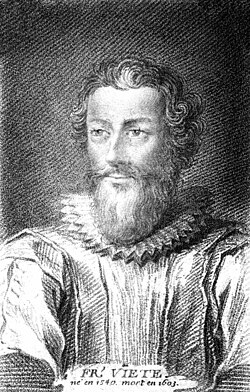
Sources: Viète (MacTutor) · Van Roomen (MacTutor).
In everyday life
- Kick and throw. Without air resistance, a ball thrown with speed $v$ and angle $\theta$ reaches $\frac{v^2\operatorname{sen} 2\theta}{g}$. The greatest range is at $45^\circ$, because $\operatorname{sen} 2\theta$ is maximum at $2\theta = 90^\circ$; with $v = 20$ m/s, it is about 40,8 m.
- Angles with the same range. Launches at $30^\circ$ and $60^\circ$ fall in the same place, since $\operatorname{sen} 60^\circ = \operatorname{sen} 120^\circ$ — one lower, the other higher.
- Computer drawing. CAD programs draw circumference arcs using the $t = \operatorname{tg}\frac{\theta}{2}$ parameter, which transforms sine and cosine into polynomial fractions, which are easy to calculate.
Theory
Circular functions of 2a
Let’s do $2a = a + a$ and apply the addition formulas.
TeoremaDouble bow
$$\cos 2a = \cos^2 a - \operatorname{sen}^2 a = 2\cos^2 a - 1 = 1 - 2\operatorname{sen}^2 a$$$$\operatorname{sen} 2a = 2\operatorname{sen} a \cdot \cos a \qquad\qquad \operatorname{tg} 2a = \frac{2\operatorname{tg} a}{1 - \operatorname{tg}^2 a}$$View the demos
I) $\cos 2a = \cos(a + a) = \cos a\cos a - \operatorname{sen} a\operatorname{sen} a = \cos^2 a - \operatorname{sen}^2 a$. Replacing $\operatorname{sen}^2 a$ with $1 - \cos^2 a$, or $\cos^2 a$ with $1 - \operatorname{sen}^2 a$, we obtain the other two forms.
II) $\operatorname{sen} 2a = \operatorname{sen}(a + a) = \operatorname{sen} a\cos a + \operatorname{sen} a\cos a = 2\operatorname{sen} a\cos a$.
III) $\operatorname{tg} 2a = \operatorname{tg}(a + a) = \dfrac{\operatorname{tg} a + \operatorname{tg} a}{1 - \operatorname{tg} a\operatorname{tg} a} = \dfrac{2\operatorname{tg} a}{1 - \operatorname{tg}^2 a}$.
Circular functions of 3a
Making $3a = 2a + a$ and applying the addition formulas:
TeoremaTriple bow
$$\cos 3a = 4\cos^3 a - 3\cos a \qquad \operatorname{sen} 3a = 3\operatorname{sen} a - 4\operatorname{sen}^3 a \qquad \operatorname{tg} 3a = \frac{3\operatorname{tg} a - \operatorname{tg}^3 a}{1 - 3\operatorname{tg}^2 a}$$View the demos
I) $\cos 3a = \cos 2a\cos a - \operatorname{sen} 2a\operatorname{sen} a = (2\cos^2 a - 1)\cos a - (2\operatorname{sen} a\cos a)\operatorname{sen} a$
$= (2\cos^2 a - 1)\cos a - 2\operatorname{sen}^2 a\cos a = (2\cos^2 a - 1)\cos a - 2(1 - \cos^2 a)\cos a = 4\cos^3 a - 3\cos a$.
II) $\operatorname{sen} 3a = \operatorname{sen} 2a\cos a + \operatorname{sen} a\cos 2a = (2\operatorname{sen} a\cos a)\cos a + \operatorname{sen} a(1 - 2\operatorname{sen}^2 a)$
$= 2\operatorname{sen} a(1 - \operatorname{sen}^2 a) + \operatorname{sen} a(1 - 2\operatorname{sen}^2 a) = 3\operatorname{sen} a - 4\operatorname{sen}^3 a$.
III) $\operatorname{tg} 3a = \dfrac{\operatorname{tg} 2a + \operatorname{tg} a}{1 - \operatorname{tg} 2a\operatorname{tg} a} = \dfrac{\frac{2\operatorname{tg} a}{1 - \operatorname{tg}^2 a} + \operatorname{tg} a}{1 - \frac{2\operatorname{tg} a}{1 - \operatorname{tg}^2 a}\operatorname{tg} a} = \dfrac{2\operatorname{tg} a + \operatorname{tg} a(1 - \operatorname{tg}^2 a)}{(1 - \operatorname{tg}^2 a) - 2\operatorname{tg}^2 a} = \dfrac{3\operatorname{tg} a - \operatorname{tg}^3 a}{1 - 3\operatorname{tg}^2 a}$.
Division formulas
Let’s calculate the trigonometric functions of $\frac{x}{2}$, known as one of the circular functions of $x$.
TeoremaArc half (given cos x)
$$\cos\frac{x}{2} = \pm\sqrt{\frac{1 + \cos x}{2}} \qquad \operatorname{sen}\frac{x}{2} = \pm\sqrt{\frac{1 - \cos x}{2}} \qquad \operatorname{tg}\frac{x}{2} = \pm\sqrt{\frac{1 - \cos x}{1 + \cos x}}$$View the demo
We know that $\cos 2a = 2\cos^2 a - 1$ and $\cos 2a = 1 - 2\operatorname{sen}^2 a$. Doing $2a = x$:
$$\cos x = 2\cos^2\frac{x}{2} - 1 \;\Longrightarrow\; \cos^2\frac{x}{2} = \frac{1 + \cos x}{2} \qquad \cos x = 1 - 2\operatorname{sen}^2\frac{x}{2} \;\Longrightarrow\; \operatorname{sen}^2\frac{x}{2} = \frac{1 - \cos x}{2},$$e $\operatorname{tg}\frac{x}{2} = \dfrac{\operatorname{sen}\frac{x}{2}}{\cos\frac{x}{2}}$.
AtençãoThe ± signs
Signs only make sense when you know $\cos x$ without knowing $x$. Knowing that $\cos x = \cos x_0$, we have
$$1^{\text{a}} \text{ solução: } x = x_0 + 2k\pi \;\Rightarrow\; \frac{x}{2} = \frac{x_0}{2} + k\pi \;\;(\text{I}) \qquad 2^{\text{a}} \text{ solução: } x = -x_0 + 2k\pi \;\Rightarrow\; \frac{x}{2} = -\frac{x_0}{2} + k\pi \;\;(\text{II})$$Since $k$ can be even or odd, there are 4 arcs $\frac{x}{2}$ possible, which give two symmetric values for each function. For example, for cosine:
- (I), $k$ pair: $\cos\frac{x}{2} = \cos\left(\frac{x_0}{2} + 2k_1\pi\right) = \cos\frac{x_0}{2}$;
- (I), $k$ odd: $\cos\frac{x}{2} = \cos\left[\frac{x_0}{2} + (2k_1 + 1)\pi\right] = -\cos\frac{x_0}{2}$;
- (II), $k$ pair: $\cos\frac{x}{2} = \cos\left(-\frac{x_0}{2}\right) = \cos\frac{x_0}{2}$;
- (II), $k$ odd: $\cos\frac{x}{2} = \cos\left(-\frac{x_0}{2} + \pi\right) = -\cos\frac{x_0}{2}$.
When the quadrant of $\frac{x}{2}$ is known, the corresponding sign is chosen.
Given $\operatorname{sen} x$. As $\cos x = \pm\sqrt{1 - \operatorname{sen}^2 x}$, from $\operatorname{sen} x$ we calculate $\cos x$ and enter the formulas above.
Half arc tangent
Let’s write the trigonometric functions from $x$ known to $\operatorname{tg}\frac{x}{2}$. From the multiplication formulas:
$$\operatorname{sen} 2a = 2\operatorname{sen} a\cos a = 2\operatorname{sen} a \cdot \frac{\cos^2 a}{\cos a} = 2 \cdot \frac{\operatorname{sen} a}{\cos a} \cdot \frac{1}{\sec^2 a} = \frac{2\operatorname{tg} a}{1 + \operatorname{tg}^2 a} \qquad \operatorname{tg} 2a = \frac{2\operatorname{tg} a}{1 - \operatorname{tg}^2 a}.$$Making $2a = x$ and $a = \frac{x}{2}$, and noting that $\cos x = \dfrac{\operatorname{sen} x}{\operatorname{tg} x}$:
TeoremaAs a function of t = tg(x/2)
$$\operatorname{sen} x = \frac{2t}{1 + t^2} \qquad \cos x = \frac{1 - t^2}{1 + t^2} \qquad \operatorname{tg} x = \frac{2t}{1 - t^2}, \qquad t = \operatorname{tg}\frac{x}{2}.$$The use of these three formulas is to replace $\operatorname{sen} x$, $\cos x$ and $\operatorname{tg} x$ with a single function, $\operatorname{tg}\frac{x}{2}$, through rational expressions. This type of substitution is widely used in solving trigonometric equations (chapter VII).
The exercises in this section are numbers 147 to 170 from chapter list.