Every morning in the early part of the above-cited month, on my coming down to breakfast, your (then) little brother William Edwin, and yourself, used to ask me, “Well, Papa, can you multiply triplets?” Whereto I was always obliged to reply, with a sad shake of the head: “No, I can only add and subtract them.”
— William Rowan Hamilton, letter to his son Archibald (1865)
William Rowan Hamilton (1805–1865) was Ireland’s greatest mathematician. A child prodigy in languages, he was appointed Royal Astronomer of Ireland at 21, while still a student. He rewrote the whole of optics from a single function, predicted an effect of light that nobody had seen and that was observed a few months later, and gave mechanics the form that quantum physics would use a century afterwards.
But he is remembered above all for a walk. On 16 October 1843, strolling with his wife along a Dublin canal, he found the rule he had been seeking for years for multiplying “numbers” with four parts, the quaternions, and carved it with a penknife on a stone of the bridge. To get there he had to give up one of the oldest rules of arithmetic: that the order of the factors does not change the product.
In this trail we tell Hamilton’s life and redo, with the calculations in full view, eight of his ideas.
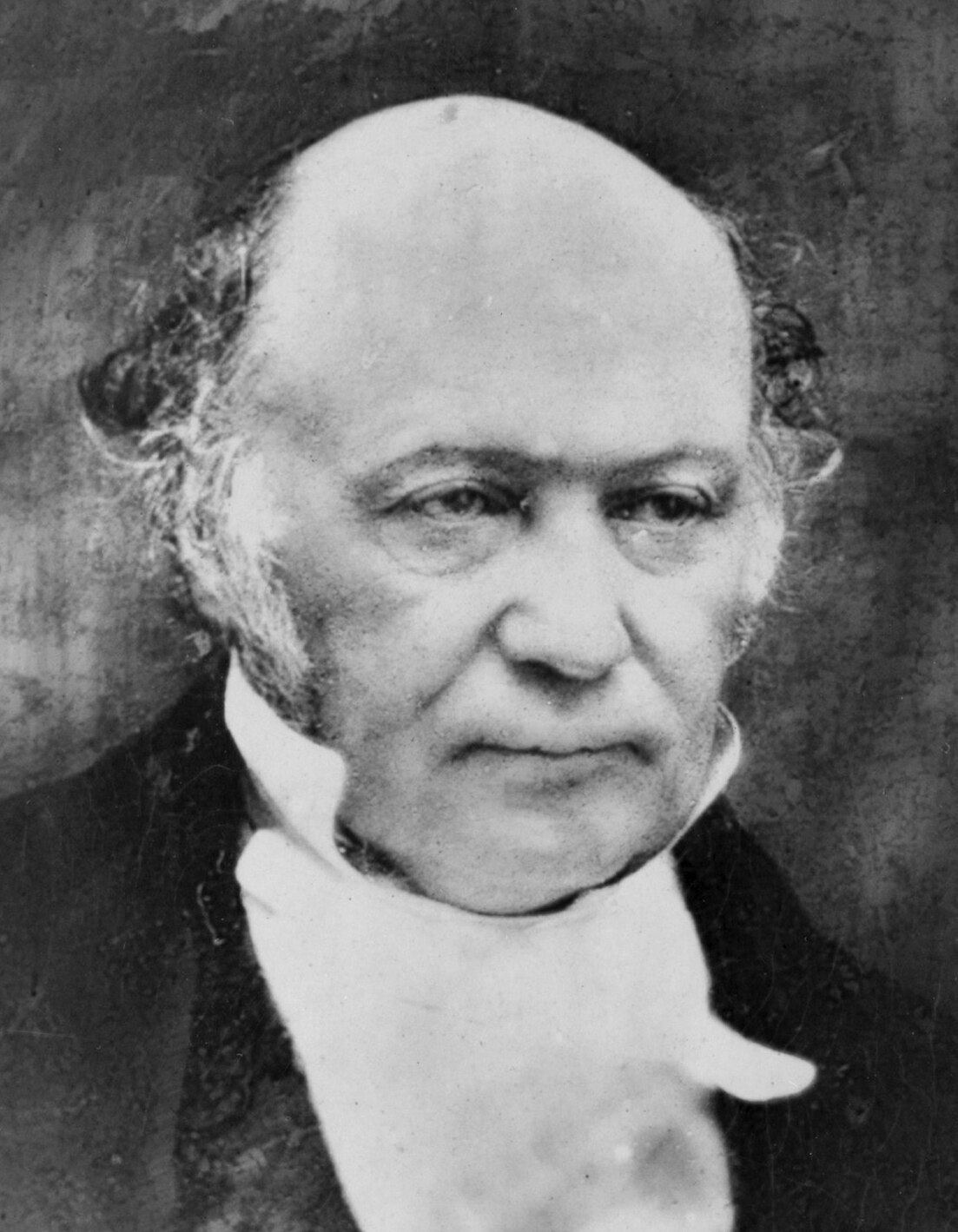
Who he was
William Rowan Hamilton
- Nascimento
- 4 August 1805, Dublin
- Morte
- 2 September 1865, Dunsink Observatory, near Dublin
- Origem
- Ireland
- Áreas
- Optics, dynamics, algebra, quaternions and graph theory
Reading guide
Biography
Discovery and proof
- Systems of rays and conical refraction
- Complex numbers as couples
- Hamilton’s mechanics
- Quaternions: the formula on the bridge
- Rotating in space with quaternions
- Vectors and scalars: Hamilton’s words
- The Cayley–Hamilton theorem
- The Icosian game and Hamiltonian cycles