
Euler's Eyes
2026-10-27
The life of William Rowan Hamilton
Timeline
- 1805Born on the night of 3 to 4 August in Dublin, the son of a solicitor.
- 1808Goes to live in Trim with his uncle James, a clergyman and schoolmaster, who teaches him languages.
- 1818Takes on the American calculating prodigy Zerah Colburn; the defeat leads him to mathematics.
- 1823Enters Trinity College Dublin in first place.
- 1827While still a student, is appointed Royal Astronomer of Ireland. Visits Wordsworth in the Lake District.
- 1832Predicts conical refraction, observed soon afterwards by Humphrey Lloyd.
- 1833Marries Helen Bayly. Presents complex numbers as couples.
- 1834Publishes his general method in dynamics.
- 1835Is knighted and becomes Sir William.
- 1837Becomes President of the Royal Irish Academy.
- 1843On 16 October discovers quaternions and carves the formula on a bridge.
- 1853Publishes the Lectures on Quaternions.
- 1857Invents the Icosian game.
- 1865Is the first foreigner elected to the National Academy of Sciences of the United States. Dies on 2 September at Dunsink.
- He is born on the night of 3 to 4 August 1805, in Dominick Street, the son of a solicitor. At three he is sent to live with an uncle.
- He grows up with his uncle James, a clergyman and schoolmaster, who teaches him languages. At thirteen he claims to know a dozen, from Latin to Persian.
- He studies in Dublin and wins the top prizes in classics and in science. While still a student he presents his theory of systems of rays.
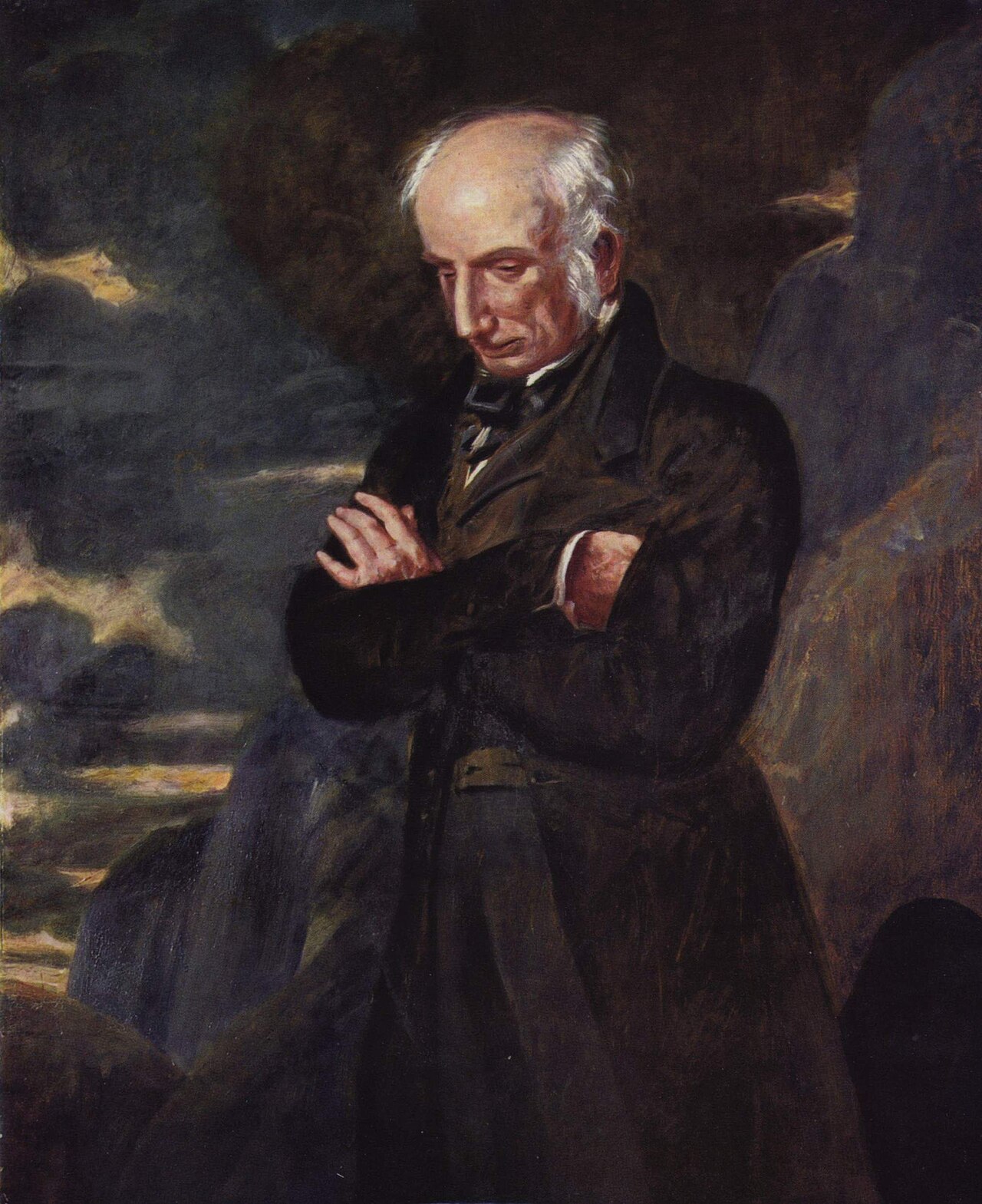
- He visits William Wordsworth in the Lake District. The two become lifelong friends, and the poet advises him to leave poetry for science.
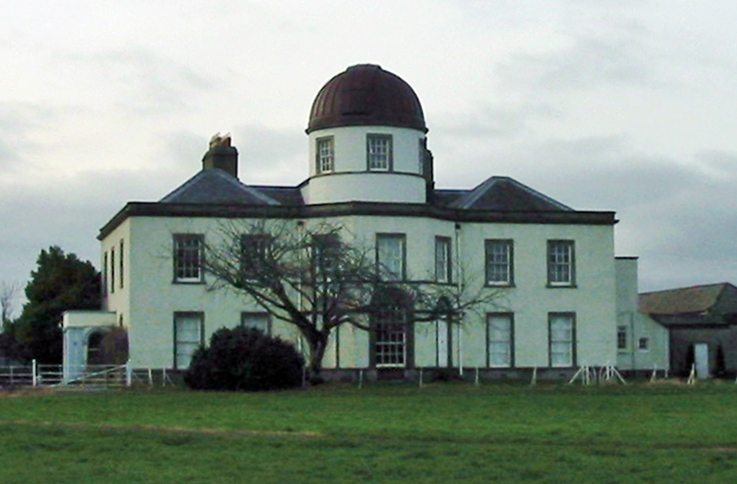
- At 21 he becomes Royal Astronomer of Ireland. There he writes his optics, his mechanics and his quaternions. He dies at the observatory on 2 September 1865.
- On 16 October, walking with his wife along the Royal Canal, he finds the rule for quaternions and carves it on a stone of the bridge.
- 1805–1808 · Dublin
- 1808–1823 · Trim
- 1823–1827 · Trinity College
- 1827 · Rydal Mount
- 1827–1865 · Dunsink Observatory
- 1843 · Broom Bridge
A boy and thirteen languages
William Rowan Hamilton was born at midnight between 3 and 4 August 1805 in Dublin, the fourth of nine children of a solicitor. At three he was sent to Trim, a small town fifty kilometres away, to be brought up by his uncle James, an Anglican clergyman who ran a school and loved languages.
The uncle found the ideal pupil. At five the boy read Latin, Greek and Hebrew; at thirteen he claimed to know a dozen languages, among them Persian, Arabic, Sanskrit, Hindustani and Malay. At fourteen he wrote a letter of welcome in Persian to the Persian ambassador, who was passing through Dublin.
Mathematics arrived through a challenge. In 1818 Hamilton faced, in a contest of mental arithmetic, Zerah Colburn, an American boy who was being exhibited around Europe as a calculating prodigy. He came off worse in most of the trials, but he was fascinated, wanted to understand Colburn’s methods and from then on began to read Euclid, Newton and Lagrange. At seventeen he found a mistake in an argument in Laplace’s Celestial Mechanics, and his work reached John Brinkley, the Royal Astronomer of Ireland, who is said to have remarked: “This young man, I do not say will be, but is, the first mathematician of his age.”
Trinity College and the observatory
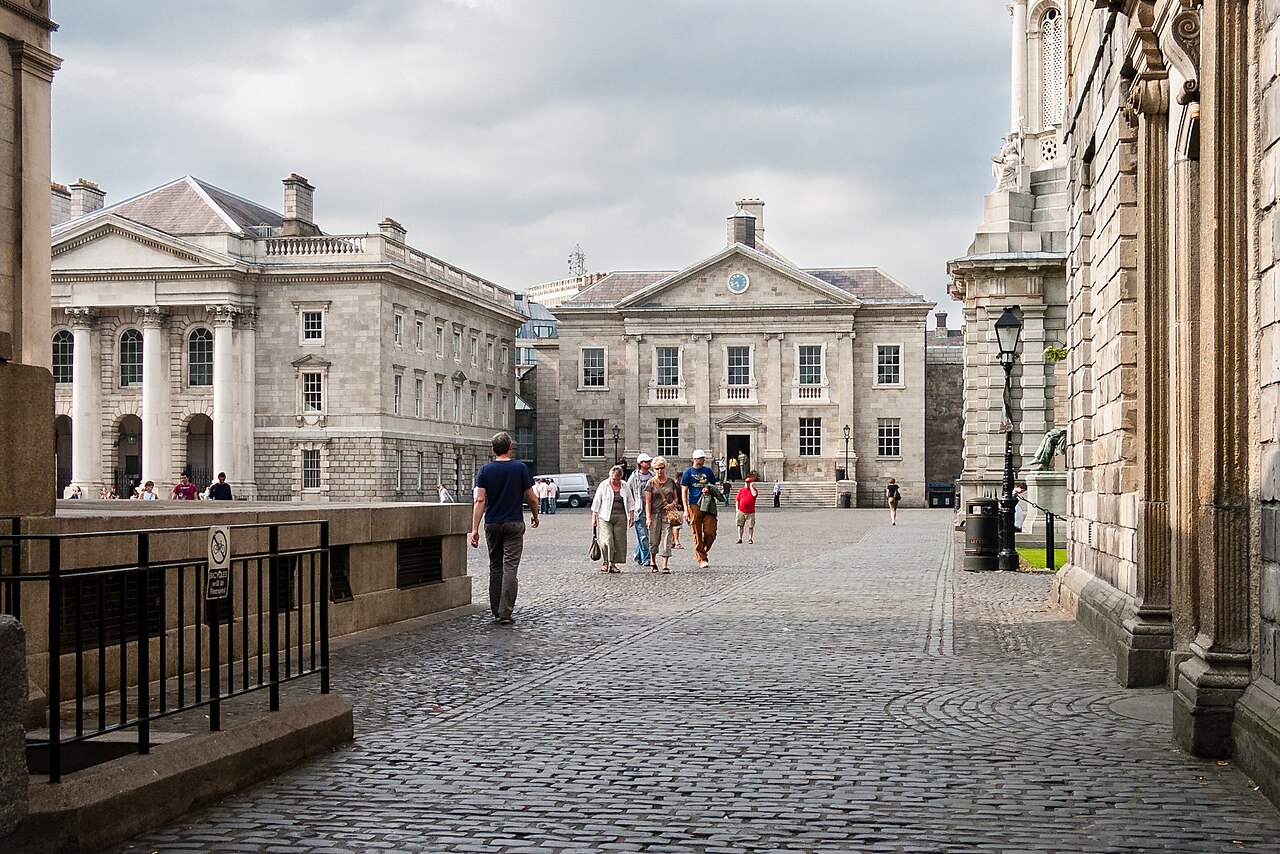
In 1823 Hamilton entered Trinity College Dublin in first place among a hundred candidates. There he won top marks both in classics and in science, something extremely rare, and presented to the Royal Irish Academy a paper on rays of light that would become his theory of systems of rays.
In 1827, when Brinkley was made a bishop, the university needed a new professor of astronomy. At 21, and still without a degree, Hamilton was chosen as Andrews Professor of Astronomy and Royal Astronomer of Ireland, with the right to live at Dunsink Observatory, on the outskirts of Dublin. He lived there until his death. He was never a great observer of the sky: his observatory was his desk.
The poet
Hamilton wanted to be a poet as much as a mathematician. In September 1827 he visited William Wordsworth at Rydal Mount, in the Lake District, and the two became lifelong friends. Hamilton sent him poems; Wordsworth replied with affection and frankness, suggesting that his friend’s talent lay more in science than in verse. Wordsworth visited Dunsink in 1829, and Hamilton’s sister Eliza, also a poet, joined the circle.
His love life was less happy. His first love, Catherine Disney, was married by her family to an older clergyman, and Hamilton never forgot her. In 1833 he married Helen Bayly, with whom he had three children: William Edwin, Archibald Henry and Helen Eliza. Helen was in poor health and spent long periods away from home.
The years of glory
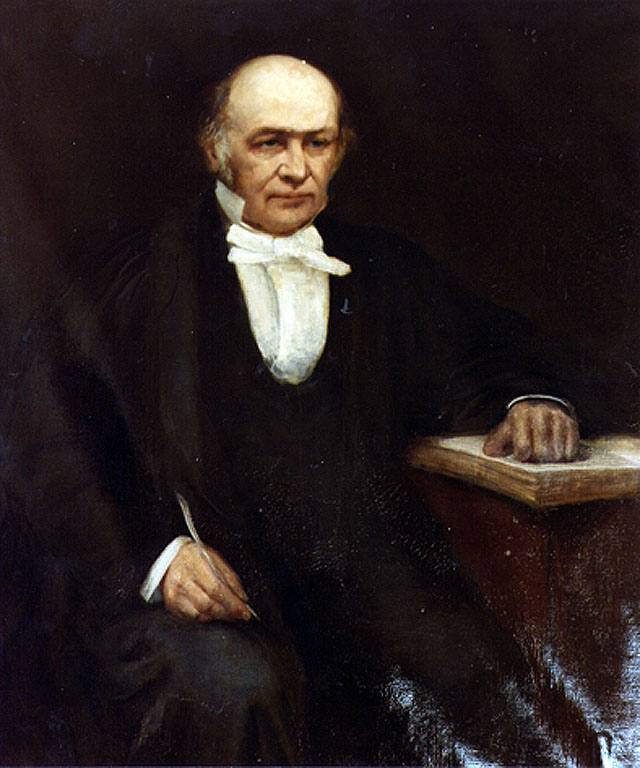
The 1830s were Hamilton’s decade. In 1832 he predicted from his theory that certain crystals would turn a ray of light into a cone, and the effect was seen soon afterwards: conical refraction made him famous. In 1833 he showed how to treat complex numbers as couples. In 1834 and 1835 he published the mechanics that bears his name. In 1835, at a meeting of the British Association in Dublin, he was knighted; in 1837 he was elected President of the Royal Irish Academy.
And there was the problem that would not let him go: how to multiply triplets, numbers with three parts, the way complex numbers are multiplied. The solution came, after years of attempts, on a walk in 1843, when he realised that he needed four parts, not three. Quaternions occupied the rest of his life.
The last years
Hamilton devoted the next twenty-two years to quaternions. He published the Lectures on Quaternions in 1853, more than seven hundred pages long, and spent his last years writing the Elements of Quaternions, which appeared, unfinished, in 1866, edited by his son William Edwin. In the middle of all this he invented a puzzle, the Icosian game, and sold the rights for 25 pounds.
His biographers record that he drank too much, especially from the 1840s on, and that life at Dunsink grew more and more disordered. In 1865 he learned that he had been the first foreigner elected to the newly founded National Academy of Sciences of the United States. He died on 2 September 1865, at Dunsink, aged sixty, and was buried in Mount Jerome Cemetery, in Dublin.
Exercise: the quaternion years
Hamilton discovered quaternions in October 1843 and died in September 1865. What fraction of his adult life, counted from age 18, did he spend studying quaternions?
His adult life runs from 1823 to 1865, about 42 years. Quaternions occupied about 22 years, from 1843 to 1865. The fraction is $\frac{22}{42} \approx 0.52$: more than half of his adult life.
Exercise: the youngest astronomer
Hamilton was appointed in June 1827 and was born in August 1805. How old was he? And how many years did he hold the post, until his death in 1865?
In June 1827 he had not yet turned 22: he was 21. He held the post from 1827 to 1865, that is, 38 years as Royal Astronomer, almost his whole adult life spent at the same observatory.
Sources: Thomas L. Hankins, Sir William Rowan Hamilton (1980) · Robert Perceval Graves, Life of Sir William Rowan Hamilton, 3 vols. (1882–1889) · Hamilton’s biography, MacTutor · Seán O’Donnell, William Rowan Hamilton: Portrait of a Prodigy (1983).
All topics on William Rowan Hamilton · Systems of rays and conical refraction →